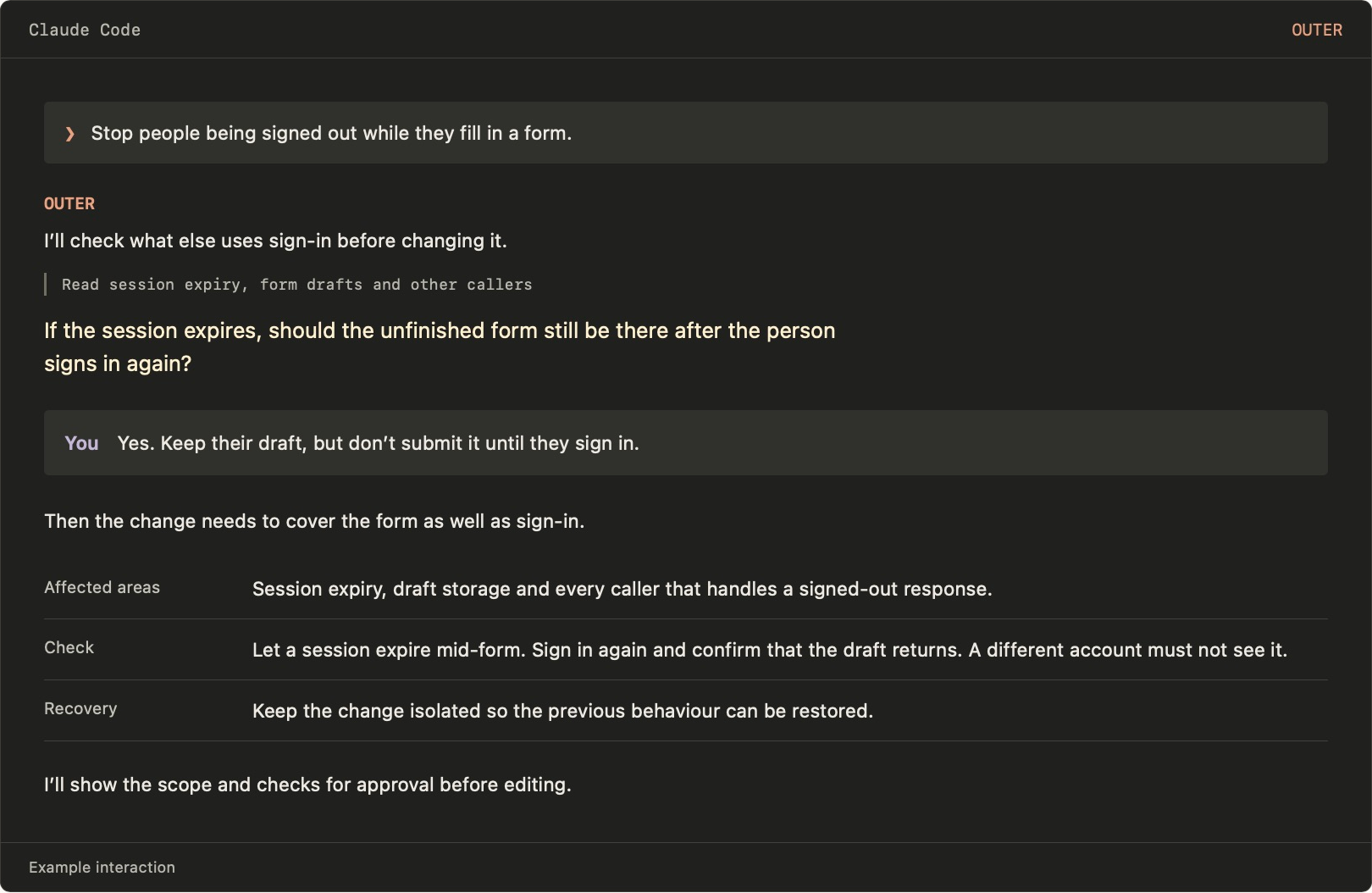
The missing question can matter more than the code.
A feature can look finished while a shared behaviour has changed elsewhere. A nontechnical builder may not know that altering sign-in could affect an unfinished draft, or that a repeated click could repeat an action.
OUTER inspects the request and the code, then estimates the blast radius. It identifies affected users, systems and existing behaviour so there is something concrete to review before editing.
Ask about consequences in ordinary language.
Instead of asking the builder to choose a locking strategy, the agent asks what should happen if two people claim the last seat at the same time. That is a decision the person directing the work can answer.
The interview covers the intended outcome, unacceptable consequences, trade-offs, evidence and recovery. The agent translates the answers into implementation choices and a checkable plan.
The public edition is available to inspect.
The free OUTER edition is MIT licensed and is no longer actively maintained. Development continues in the commercial Super-outer edition.
The method helps bring preventable mistakes into view. It does not guarantee that every consequence has been found, and optional hooks do not provide a sandbox.
These questions also arise in executive programmes.
Explore GenAI Strategy