Start from the pressure in the business
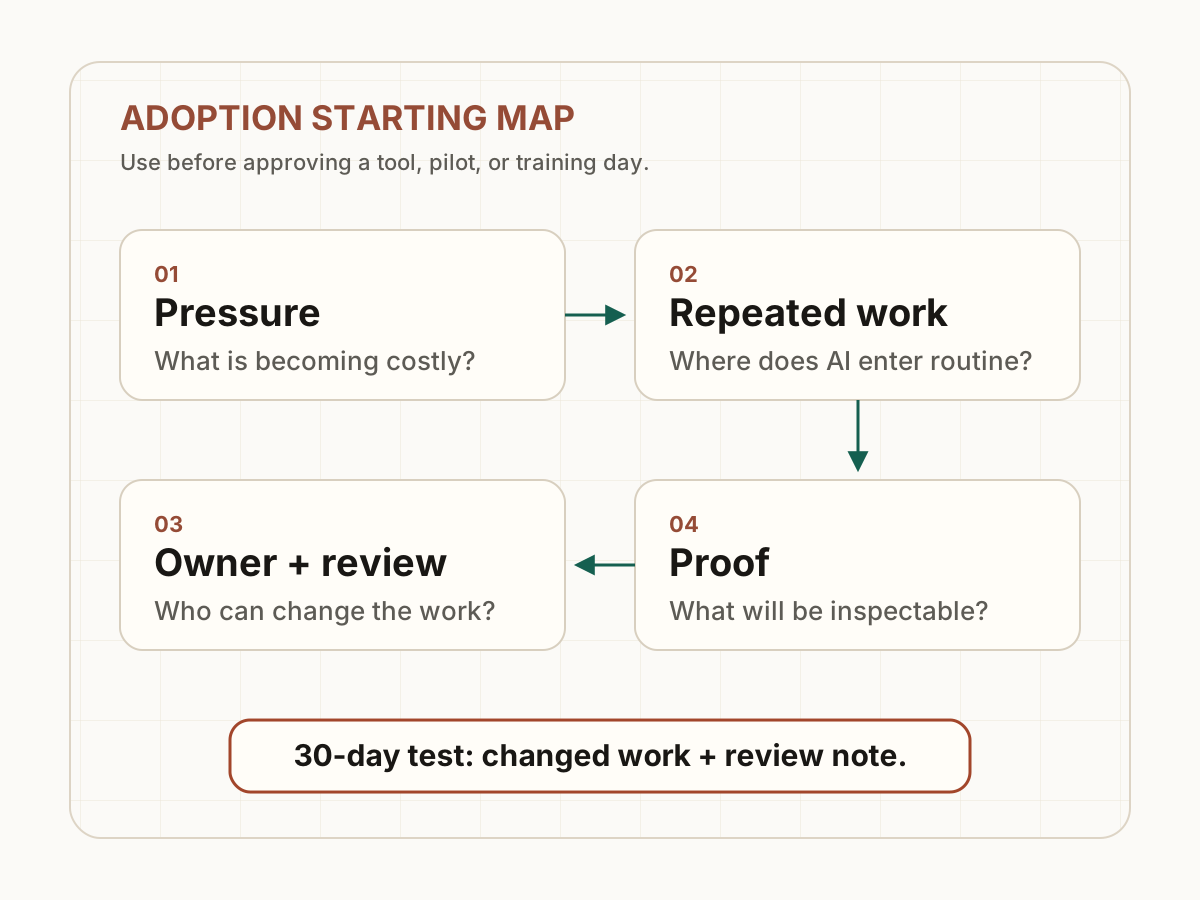
Begin with a pressure already visible to leadership: slow review cycles, weak service levels, repeated analysis, hidden AI use, or a workflow where effort is rising without better decisions.
Most organisations do not need another tool list. They need a serious way to choose the first use cases, re-train employees around real work, and decide what managers will inspect after the session.
A GenAI adoption framework is a management sequence for CXOs who need to turn interest, training, and scattered pilots into changed work. It should answer four practical questions: where should we start, which use cases deserve investment, what should be stopped, and what must managers review after the first session.
The first move is to name the recurring workflow, decision, document, or conversation that should improve. The next move is to test whether that work has business value, a clear owner, accessible data, reviewable output, manageable risk, and a team that can change its routine.
A serious framework also connects employee re-training to manager review. Employees need safe practice on work they recognise. Managers need evidence, boundaries, and a follow-up rhythm. The test is not tool usage. The test is whether AI-assisted work can be trusted, inspected, and improved without creating hidden accountability gaps.
The framework is deliberately practical. It is built for organisations that have already heard the AI promise and now need to choose defensible work.
Begin with a pressure already visible to leadership: slow review cycles, weak service levels, repeated analysis, hidden AI use, or a workflow where effort is rising without better decisions.
A stalled pilot is adoption evidence. It usually reveals a missing owner, unclear review habit, weak trust boundary, or routine that nobody had permission to change.
A useful first use case has business value, reviewable output, a clear owner, manageable risk, and a team that can absorb the change.
Employees need work-like practice, but managers need a way to inspect AI-assisted output. Training becomes useful when it leaves a review rhythm behind.
Indian organisations do not have one neat AI training problem. The demand shows up through existing wallets, obligations, and operating pressures. The framework converts that pressure into a starting point.
Most organisations have more AI ideas than capacity. The first leadership job is to choose a small portfolio: a few quick wins, two or three visible lighthouses, and one strategic bet that needs preparation.
Time saved is not automatically ROI. Value appears only when capacity changes volume, service levels, quality, risk, growth, vendor spend, or the work people are paid to do.
Underuse is rarely just a training gap. It may be role anxiety, privacy confusion, weak manager behaviour, unclear incentives, or no safe way to show AI-assisted work.
I use this sequence when the leadership question is no longer whether AI is impressive. The question is which work should change, what proof would make the change defensible, and how the first 90 days should be governed.
Draw the repeating work as it is done today: handoffs, queues, checks, documents, decisions, and the points where people wait for information or approval.
Ask what decision the process exists to make. If prediction, drafting, search, and summarising became cheap, would the organisation still design the work this way?
A point use case improves a step. A system bet changes dependent routines, decision rights, or the artifact itself. Do not decompose the old workflow harder when the better move is to redesign around the decision.
Risk is about the cost of being wrong. Verifiability is the cost of checking whether the output is right. High-risk work can still move when evidence is cheap to inspect. Fluent but hard-to-check output should stay assistive.
Compare value, data readiness, integration cost, reviewability, ownership, and adoption capacity. This prevents every attractive idea from becoming a pilot backlog.
Choose quick wins for momentum, lighthouses for visible adoption, and one strategic bet that needs governance or data preparation. Name the owner and the 30-day evidence before the room ends.
A useful framework should stay in the room after the session. Treat the map as the working sheet; the other artifacts are companion checks for failed pilots, use-case selection, and follow-up.
For programme inquiries, share the audience, function, cohort size, and the business problem you want the adoption effort to solve.
Email Dr. Shiva Kakkar